Explore the best places
Results for castelo in Portugal


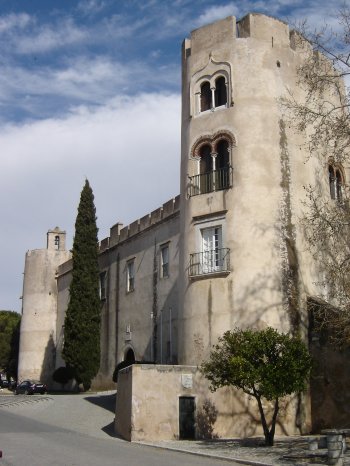
Castelo de Alcantarilha
- heritage
Travessa do Castelo
8365-019, Alcantarilha
Small section of a masonry defensive wall that stands back to back to modern buildings.
Castelo de Alcobaça
- heritage
Rua do Castelo, 35
2460-036, Alcobaça
Located on a rise of about 70 meters, west of the monastery, Alcobaça Castle was commissioned by King Afonso Henriques in 1147, on the presumed ruins of a 6th-century fortification. Destroyed several times during the Reconquista, King Sancho ordered its reconstruction to shelter the Alcobaça monks and the population in case of attack. After suffering several seismic shocks, it ended up serving as a prison during the reign of the Philips.
Castelo de Alcoutim
- heritage
Largo do Castelo, 4
8970-055, Alcoutim
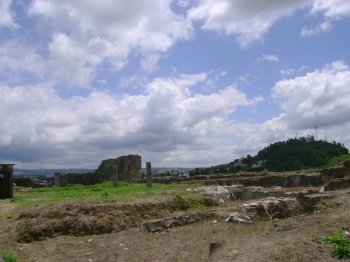
It overlooks the river and, according to archaeological excavations, was inhabited during the Iron Age and early Roman occupation. Built in the 14th century as a border defense, it underwent renovations in the 17th century. Inside, there is a small museum displaying archaeological finds and remains of buildings discovered during the excavations.
Castelo de Alegrete
- heritage
Alegrete
7300-126, Portalegre
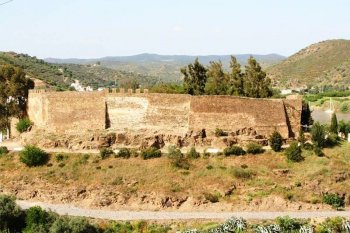
A castle located in a border area that was the scene of many war campaigns. The construction of the wall, reinforced with semi-cylindrical towers, was the result of a deal between the people of Alegrete and King Dinis: the residents would build the wall, and the monarch would grant the charter. In addition to repopulating the village, Dinis built the keep and, in 1319, continued the work begun by his father, Dom Afonso III. The old town clock stood at the main gate of the old fence.
Castelo de Alenquer
- heritage
Calçada Damião de Gois
2580, Alenquer
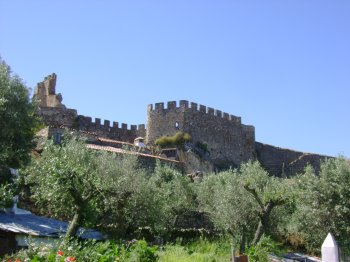
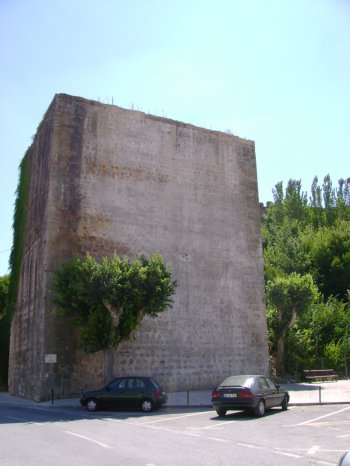
A rectangular castle with two corners formed by towers. It was built by King Dinis in the 13th century. One of the entrance gates bears the royal crown and King Manuel's coat of arms. Currently, only sections of the wall remain, some of which are integrated into buildings, such as the Porta da Conceição and the Torre da Couraça.
Castelo de Algoso
- heritage
Rua do Castelo
5230-010, Vimioso
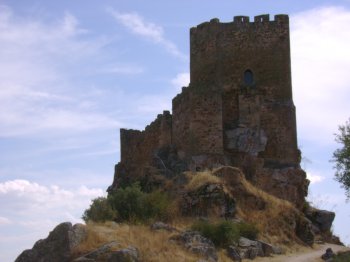
Castle located on top of a rocky cliff, enjoying a privileged position as a viewpoint, the exact date of its construction is unknown, but it is assumed that it was built by Mendo Rufino, during the reign of King Afonso Henriques or during the reign of King Sancho I. From the castle, currently in a precarious state of conservation, remain some turrets, a small courtyard and the Keep, inside which three records of occupation are visible, the first two of use for housing and the last of defense. It belonged to the group of castles that formed the defense line …
Castelo de Aljezur
- heritage
Rua Dom Paio Pires Correia
8670-156, Cerro do Castelo
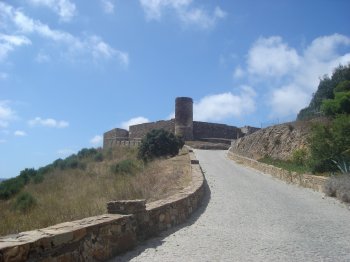
Built on a hill overlooking the river, human occupation of this area dates back to the Iron Age. It allowed control of the river port that connected it to the sea and protected the population from enemy attacks. A vast walled area, two towers reinforce its defenses. From its walls, one can see the plain and the series of hills leading to Monte Clérigo beach.
Castelo de Alva
- heritage
Quinta de Alva
5180-301, Freixo de Espada à Cinta
Fortification with probable origins of the Castro culture, rebuilt in the medieval period, around the 12th century. Are still visible the ruins of the ancient wall around the village, which they realize its oval plant.
Castelo de Alverca
- heritage
Rua dos Lavadouros
2615, Alverca do Ribatejo
The castle is only a small part of the wall, knowing, however, that this castle was built on land offered to the Crusaders who helped conquer the region from the Moors.
Castelo de Alvito
- heritage
Largo do Castelo
7920-999, Alvito
It is a fortified manor house from the 15th century, rare in Portugal. The dependencies are organized around a central courtyard, with characteristics of military and residential architecture. The keep and some wall sections stand out. At the base, there is a cushioned ashlar from the Roman period. Above the portal of the castle-citadel are the coat of arms of the marquises of Alvito.