Explore the best places
Results for enter now fast MAKEMUR.COM pay a judge to shorten my time in prison in Portugal


Castelo do Crato (vestígios) / Castelo da Azinheira
- heritage
Largo do Castelo, 1
7430-127, Crato
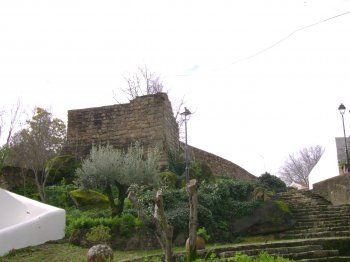
Four-pointed bastioned fortress with medieval-type walls and a redan. The ruins of the medieval fortification are visible in the central area, isolated walls or with structures attached to them for the construction of artillery platforms. As examples of ruins of modern fortification, there are four redan with a guardhouse and traces of chimneys and niches. The fort's door mantains the portcullises of the drawbridge, and there is a cistern right in the center of the fortification. Some sections of the wall and from the barbican are monumentally beautiful. The first fortress dates back to the reign of King Afonso Henriques, …
Castro de Monte Mozinho
- heritage
Galegos
4560-122, Galegos
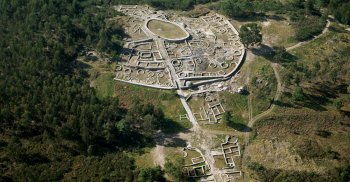
Located about 8 km away from Penafiel, this is one of the celtic villages of the parish, named Citânia do Monte Mozinho, probably the largest in the Iberian Peninsula. It occupies a high part of the mountain, at an altitude of 408 metres. From there one can view the Marão Mountain (to the East) and the Montemuro Mountain (to the South). Elísio Ferreira started the excavations in 1943. In 1974, after a 20 years interval, they restarted and the findings are to be seen in the Municipal Museum of Penafiel. The findings confirm that there was a roman time occupation, …
Fortaleza de Sagres
- heritage
EN268
8560-360, Sagres
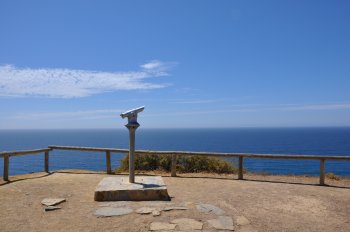
Dating back to the 16th century, this fortress has undergone several renovations over time. This fortification preserves a strong wall with ravelins and a tower and is traversed by a corridor that continues under the vault of the old tower. The reconstruction that took place in 1960 defaced the site by attempting to restore its false authenticity. In the early 20th century, the Compass Rose was discovered, drawn with stones embedded in the ground, which is believed to be contemporary with Dom Henrique. At the Sagres Fortress, in addition to enjoying the cultural heritage and stunning views over the Mareta …
Ponte da Arrábida
- heritage
Sobre o Rio Douro
4150, Porto
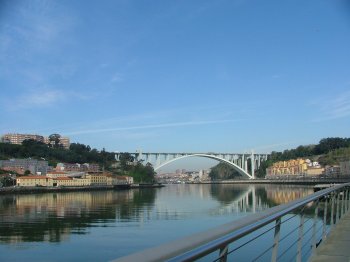
Planned by Edgar Cardoso and opened in 1963 (although the Works began in 1957), the Arrábida Bridge was one of the more advanced architectonic works of its time. The 270 metres concrete span was, for some years, a world record on this kind of bridges. The arch spire has 52 meters and the roadway rises to 70 meters height. It is said that, at the opening, many photographers and journalists from abroad came to witness an expected tragedy, because it was common sense that the “large” configuration of the bridge would not stand the weight of the vehicles. Today, it …
Serra do Açor
- country
Serra do Açor
6285, Piódão
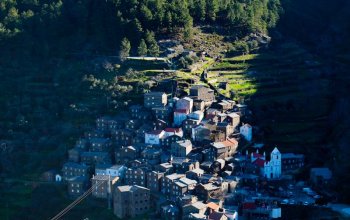
It belongs to the Old Massif, located in the central country, and it is separated from the Estrela Mountain by the Alva river valley. It is 33 km long and 12 km wide. A part of the Protected Landscape of the Açor Hill, it is mostly composed of schist and has strong but roundish contours. At times there are valleys, water courses and interesting places, such as the waterfalls at Fraga da Pena. In this protected area, also a special note to the Margaraça Woods, of huge natural value, a part of the european network of biogenetic reservations. The vegetation …
Faro do Alentejo
- country
- heritage
Faro do Alentejo
7940, Faro do Alentejo
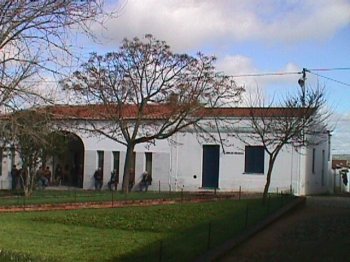
This village was founded in 1616 on the estate of S. Luís de Jacentes (now Assentes), belonging to D. Estêvão de Faro - Count of Faro and Commander of S. Salvador de Jones. It also belonged to D. Diniz de Faro, the second and last Count of Faro, and to D. Juliana de Faro, the Countess of Faro. It was a town, formerly called Farinho, a very fertile land, especially in cereals. In 1775, the town's grantee was D. José Luís de Vasconcelos e Sousa, 6th Count of Pombeiro and 1st Marquis of Belas. Its parish priest was from the …
Vila Nova de Anços
- country
- heritage
Vila Nova de Anços
3130, Vila Nova de Anços
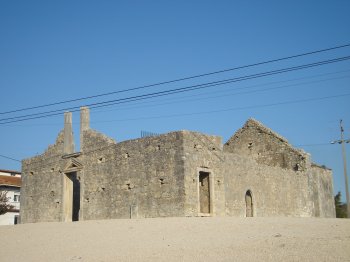
Although it is thought that this town, located on the bank of the River Soure, dates back to pre-Romanesque times, only Roman remains have been found in the region. In the XIV century it was already a very populated town, having been granted a new charter in 1513 by Dom Manuel I. In fact, Vila Nova de Anços would only cease to be the county seat in the 19th century (1836). The architectural heritage includes the Manueline pillory (Property of Public Interest), the Paços dos Duques de Cadaval with Gothic remains, the Cruz do Santo Cristo (18th century), the parish …
À Descoberta de Alfama
- heritage
Bairro de Alfama
1100, Lisboa
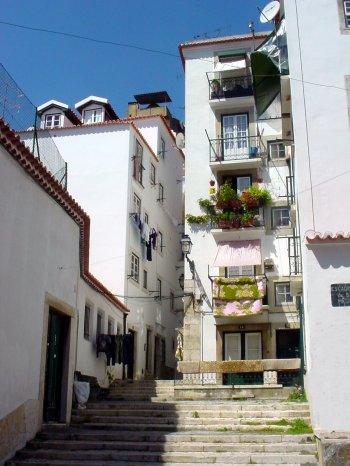
This typical quarter was once one of the most cosmopolitan of lisbon. Placed between the castle and the river, Alfama is an historical quarter that makes us go back to the time of the portuguese discoveries. Its typical buildings prevail over the hearthquake of 1755, leaving the façades intact. Experience the unique atmosphere of life in the neighborhood, with its small stores and taberns, finding your way through the..net of streets and…Because it is an area with a big declive, the best choice is to make the tour up to down.Places to visit: Casa dos Bicos; Saint Jorge's castle; Sé; …
Castelo de Campo Maior
- heritage
Rua dos Quartéis, 8
7370-102, Campo Maior
Castle where some sections of the medieval wall and the north tower are still visible. Of the 17th-century fortified perimeter, the moat and counterscarp are largely preserved, along with bastions, gates and barracks. The castle has two of its six towers, with a rectangular plan. The Manueline molding stands out in the western tower. A large hall, with two naves divided by strong ashlar pillars, has a groin vault. Ordered to be rebuilt by King Dinis in 1310, it is assumed that fortifications existed in this area of Campo Maior since Roman or Visigothic times. During the reign of King …
Cidade Romana de Grou
- heritage
Santo André
5470, Montalegre
On the slopes of the Larouco, between the Regouço River and the ribeira da Rega near the border line lies the village of Grou. Is a fortification that stands out for its morphology, in a small plateau, which taking into account the characteristics of the terrain meant that the defensive system was composed of ditches, South side, West and North, and by a thick wall that surrounds the surrounds. The wall was made of Earth and stone and the blocks of the outer edges of the wall well equipped. Inside there are few traces of buildings. Fortified settlement of Roman …
