Explore the best places


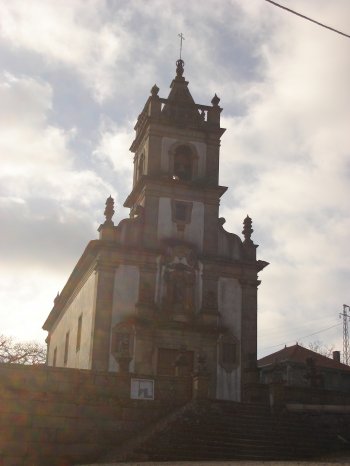
Igreja Paroquial de Afonsim / Igreja de Nossa Senhora da Assunção
- heritage
Largo da Igreja
5450-100, Afonsim
Late Baroque church with a single nave, bell tower, chancel, and sacristy. The interior features a wooden high choir, a baptistery on the Gospel side, built-in confessionals, and a late Baroque main altarpiece with Rococo elements, in polychrome and gilded carving.
Igreja Matriz de Tresminas / Igreja de São Miguel de Tresminas
- heritage
Rua da Igreja
5450, Tresminas
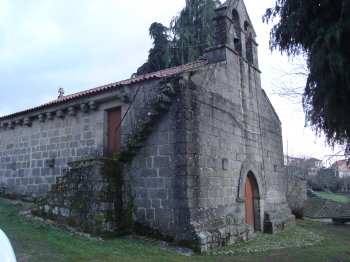
Romanesque church with a single nave, wooden ceilings, and a pointed arched portal with two molded archivolts. The interior features a Baroque main altarpiece in the Joanine style.
Museu Municipal de Vila Pouca de Aguiar
- heritage
Avenida da Noruega, 35
5450, Vila Pouca de Aguiar
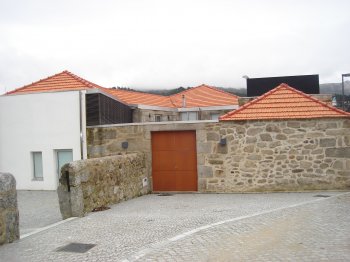
Located in the former Casa do Condado since 2007, it offers a unique journey through the region's past, guided by contact with the pre-existing features of this historic building.
Ecopista do Corgo
- country
Rua do Noval, 2
5450-287, Telões
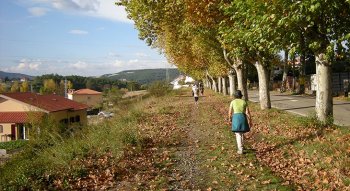
The Corgo Ecopista is the result of the restoration of the old railway line that connected Vila Pouca de Aguiar to Vila Real, which was decommissioned in 1990. It is a route that allows for walking, cycling, and horseback riding.
Pedras Salgadas Spa & Nature Park
- beach
- leisure
Parque de Pedras Salgadas
5450-140, Bornes de Aguiar
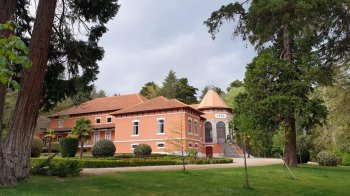
Located in a rural setting, halfway between Vila Real and Chaves, in the municipality of Vila Pouca de Aguiar, the Pedras Salgadas Hot Springs and their therapeutic effects have been known since ancient times. It is said that the Romans were already aware of these effects. However, it was in 1879 that a new direction was taken. Thus, after the waters won an award at the Vienna International Exhibition six years earlier, the thermal complex was built. Illustrious figures such as Queen Maria Pia and King Ferdinand have stayed there. The waters are especially recommended for digestive, respiratory, and osteoarticular …
Castelo de Pena de Aguiar
- heritage
Castelo
5450-280, Castelo
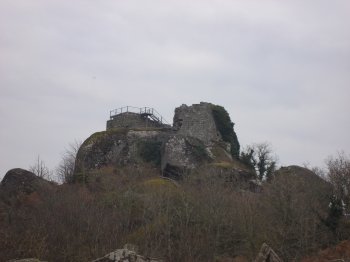
Aguiar Castle is a unique rock castle, whose current structure dates back to the 9th or 10th centuries. Situated on a massive granite boulder, archaeological finds have revealed three major levels of occupation: Prehistoric, Celtic, and Roman. Access to the building is via an entrance with six staircases, beneath an ogival portal. Climbing some rocks leads to the highest point, from which a sweeping panorama over the entire Aguiar Valley is offered. The building includes a vaulted-ceilinged room, as well as the embrasure room, a window with privileged strategic visibility.
Serra da Padrela
- country
Serra da Padrela
5450, Vila Pouca de Aguiar
Located south of Chaves, between Valpaços and Vila Pouca de Aguiar, the mountain range is part of the Trás-os-Montes Ancient Massif and is 10 kilometers long. From the top, views over the entire region are enjoyed, with highlights including Oura, Vidago, and Vilarinho.
Serra do Alvão
- country
Serra do Alvão
5450, Pensalvos
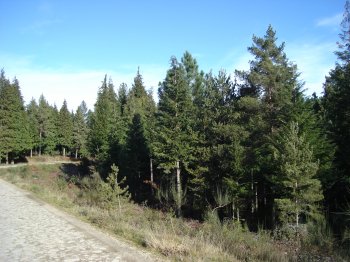
Integrated into the Alvão Natural Park, it is located west of Vila Pouca de Aguiar, in the northern extension of the Marão mountain range. It reaches a maximum altitude of 1,330 meters at the Cravelas geodetic vertex. Previously known as the Eiró mountain range, the Alvão mountain range is now also known by other names, such as the Ordem mountain range or the Sabugueiro mountain range, depending on the town. Characterized by its granite massif and pronounced plateau appearance, it has been occupied by humans since ancient times, notably the abundance of dolmens. It offers spectacular landscapes and beautiful pine …
Parque Arqueológico de Tresminas
- heritage
Lugar do Cruzeiro
5450-296, Tresminas
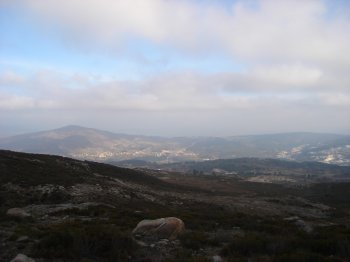
Considered one of the largest mining operations in the Roman world, the Tresminas mine began during the reign of Augustus (27 BC – 14 AD) and continued until the time of Septimius Severus. It was likely carried out using an open-pit system, creating the large craters that still bear witness to the human effort in the landscape today. A complex system of galleries was opened across the vein for the transport, disposal, and treatment of the minerals, which remains open to visitors. The Archaeological Park has viewpoints overlooking the mining pits, interpretive panels, signposted walking trails, and picnic areas. Visits …
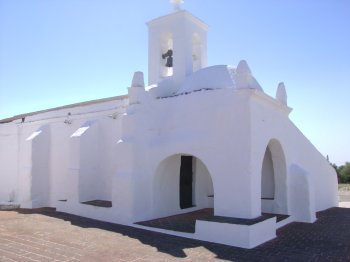
Ermida de Nossa Senhora de Guadalupe / Ermida de São Gens
- heritage
Salvador
7830, Serpa
The temple has a typology identical to the chapels built in Baixo Alentejo throughout the 16th century.